

What size snowboard should i get?
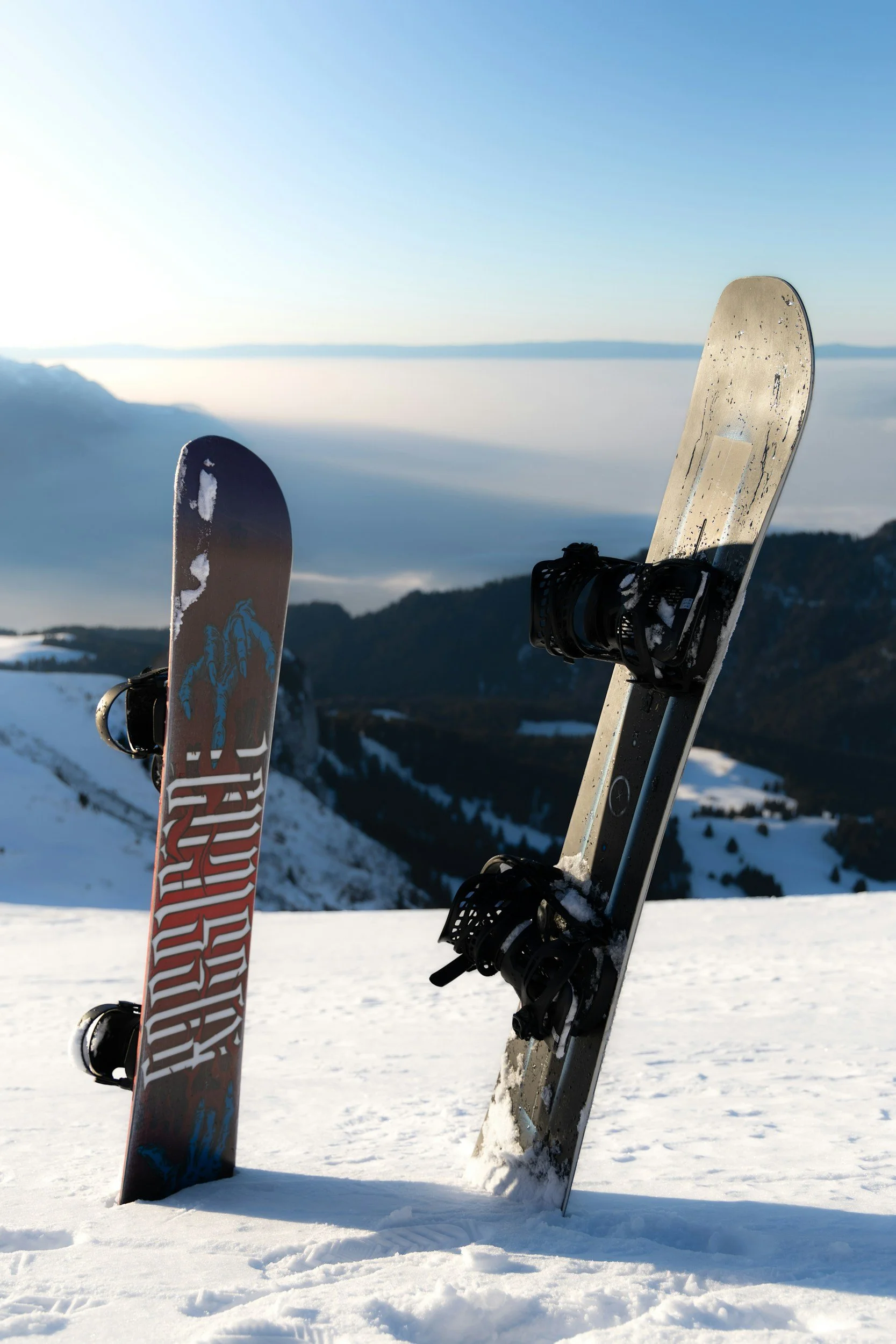
If you’re asking yourself this question, then you’ve come to the right place!
Finding the right size snowboard for YOU can be tricky, as it depends on a lot of factors, such as weight, height, foot size, skill level, riding style, etc. Because of this, it’s always best to talk with an expert who knows a thing or two about snowboards. But fear not, this page isn’t clickbait! We’ll give you the tools to get you to a good starting point for what board size is right for you.
Take your height in cm’s and multiply it by 0.87-0.90, and voila, you now have an initial estimate of your snowboard size range.
This method (and its variations) has been used for a long time in the industry, but unfortunately, it only takes into account your height. Similar to another classic “size test” of having the board length be as tall as the distance from the floor to the space between your chin and nose. The sizing charts on each company’s websites are another good place to start, but once again, they don’t take into account all of the information needed to size a snowboard properly.
For example, Weight is an incredibly important factor for sizing (perhaps even more important than height). If you are a heavier-weight rider, then you will typically want to size up from the initial size estimate. And as you would expect, if you are a lighter-weight rider, you will typically want to size down. This is because a larger board will better support the weight of a heavier rider and be more stable. Whereas a smaller board will be more controllable for a lighter-weight rider.
Regarding skill level, riders who are learning (or want to progress faster) will be able to do so easier with a downsized snowboard, as it makes the board easier to control. On the other hand, the board size for more experienced riders depends completely on their riding style.
Speaking of riding style, if you have a more freeride, high-speed, big air, powder-hunting riding style, you will typically enjoy an upsized snowboard that is more stable and floaty. But if you want to be more mellow, playful, or freestyle-focused, then you’ll typically enjoy a downsized snowboard that is more nimble and dynamic.
Boot size is a more obvious sizing adjustment; if you got big feet, you need a wider board. Usually this means upsizing or opting for a wide size snowboard if your boot is a men’s size 11 or larger. For us, we draw the line around 25 cm as the minimum waist width for a men’s size 10 boot. Although we typically recommend a little wider so you can really crank over those turns (now waist width isn’t the perfect check here, as that’s not the same as the width of the board underfoot, but most brands still haven’t caught on to giving specs on that dimension, but that’s a whole other topic. So we’ll stick with waist width for now).
For women’s boots, a size 12.5 is around where you should consider a wide snowboard. The inverse is also true, where if you have smaller boots, it could be worth downsizing to be able to turn and get up on edge more easily. Additionally, some boot brands are known for being a little chunkier than others, such as Vans, Thirty-Two, etc. This will also impact what size board you should get to avoid issues like toe drag.
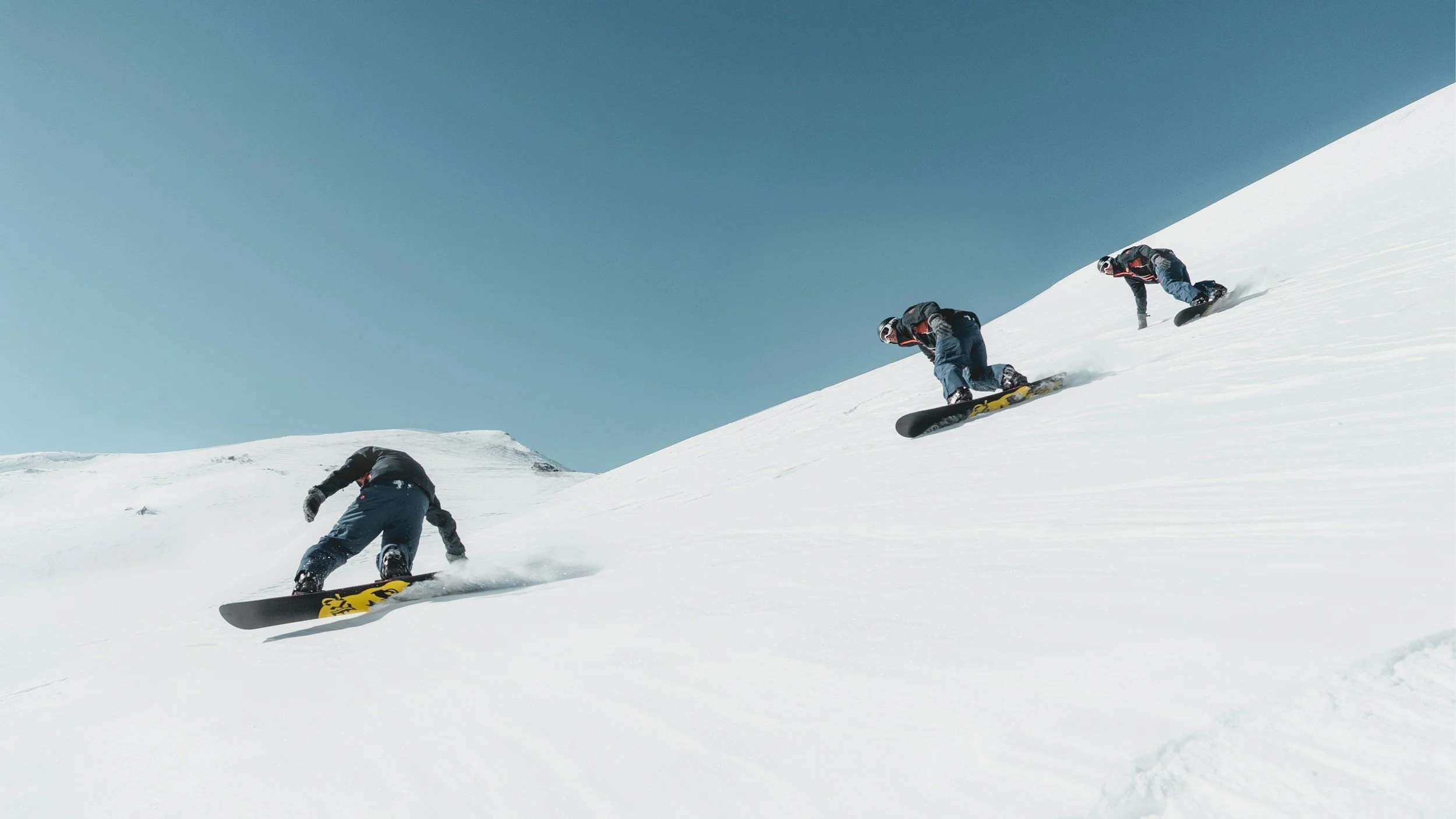
A few other factors to consider would be height-to-weight ratio, stance width, flex, and leverage. Meaning if you’re really tall and skinny, you may want a longer board for your wider stance, but due to your lighter weight, you may want to pair the longer board with a softer flex so that you can still control the larger board with your lighter body weight.
Conversely, if you’re a shorter rider who’s heavier, a longer board may not be the answer, as your narrower stance may not have the leverage to control the board properly. You’d want to consider a shorter board with a stiffer flex to support your weight better without throwing off your natural stance.
There’s also a factor of unique board shapes, such as volume-shifted boards. Which are literally designed to be ridden wider and shorter than normal, but with the same surface area as a longer, traditional-width snowboard. This allows you to size down while getting similar performance as your traditionally-sized snowboard.
Now we could keep listing factors and things to consider for sizing all day, but the takeaway is that sizing is very unique to you and your riding style.
If you want more info and a personal recommendation for YOU of what size snowboard you should get, then check out our Gear Advice Portal, where one of our riders will answer your questions, consider all factors, and get you dialed in to shred!
Cheers!