

Best Quick-Entry Snowboard Bindings: FASE vs. Supermatic vs. Flow vs. Step On
The Backstory
We don't know if you've heard, but there's been a bit of a revolution going on in the world of snowboard bindings. And when we say "a bit," we mean a MASSIVE revolution! Since the birth of snowboarding, engineers and DIYers have been innovating and experimenting with snowboard binding design to improve performance, entry, longevity, and more. And it proved quite challenging to improve bindings without some kind of compromise in another aspect of design (i.e., performance, comfort, durability, weight, etc). But in the last few years, binding technology has leaped forward and opened the door to revolutionary possibilities.
First came smaller innovations such as footbed canting, Skate-Tech, AuxTech, adjustable ankle-strap angles, mini-disks, asymmetrical chassis, etc. These innovations then combined with more significant leaps in the refinement of long-standing "quick-entry” systems, such as the K2 Clickers, rear-entry style bindings like Flow, and the popular Burton Step Ons. The new modern-day versions of these systems are a significant improvement from their original designs, but they're still not without their faults and compromises. The same can be said for the brand-new “quick-entry” binding systems, Nidecker Supermatics and FASE, which showcase that leap forward in technology, but still with their own compromises.
In this article, we'll break down each quick-entry system, what makes them unique, and which one is right for you.
The Options
Burton Step On / K2 Clicker
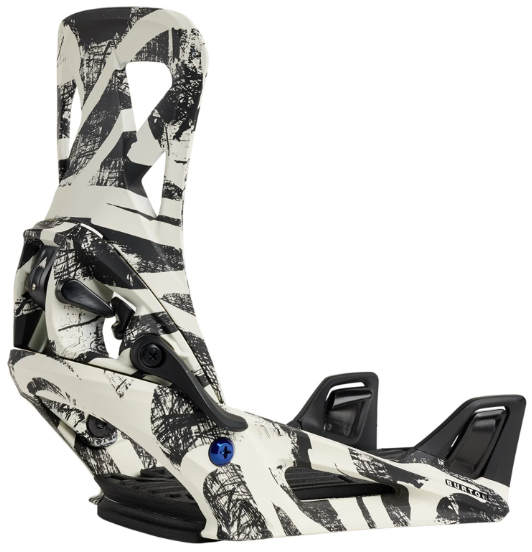
The Burton Step On and K2 Clicker bindings are the most convenient options. You simply need a compatible boot to step into the binding, and you're off! No straps, no ratchets, no fuss. To get out, you pull the release lever and step out. The trade-offs are performance, boot compatibility, and longevity.
Performance: The Step On system doesn't deliver the same response or security as a traditional strap binding. The pressure and control points differ, which changes the board feel and response. For example, the response can feel more “immediate” due to a connection point located higher on the highback. This may be a non-issue for some (even a good thing), but can be overwhelming for others and reduce the “playfulness”, “forgiveness”, and “tweakability”.
The absence of the ankle strap also impacts the pressure points on your foot and the muscles/tendons that are engaged. This will affect all riders differently, with some concerns over increased engagement of the achilles tendon with the Step On system and less protection of the ankle. The key here is to have a well-fitted and properly tightened boot that protects those muscles, tendons, and bones, regardless of the bindings you use.
Lastly, the connection points can be “less secure” if your boot doesn’t fully or properly engage before riding. In some instances, some riders have even had to be cut out when their pant cuff got caught up in the system. But you can easily get used to the new feel over time and learn to avoid any issues with practice.
Boot compatibility: This system locks you into a specific lineup of compatible boots, so if your foot doesn't fit the available options, you're out of luck. As mentioned above, a properly fitted boot is key to having a safe and fun time on the mountain. So get your boot dialed first, then choose your bindings.
Longevity: Because the boot acts as the connection to the binding, it undergoes significantly more stress at the attachment points than boots used with traditional strap bindings. Over time — often within a season or two of more frequent riding — this wears down the boots’ materials at the connection points until they can no longer lock in securely. At which point, you will need to purchase new boots. But if you’re a less frequent rider, this will be less of a concern.
Flow/Rear-Entry
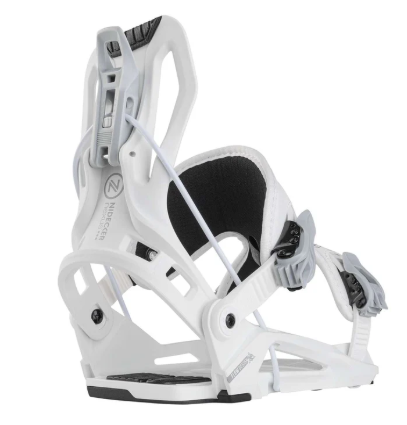
Flow or rear-entry style bindings have been around for a while and offer a convenient system that's easy to get into while remaining compatible with any boot. The trade-offs come down to security, feel, and the closing mechanism.
Security: The design has improved significantly over the years, but coming out of a Flow binding was not entirely uncommon in earlier models when undergoing a large impact or significant chatter. Not a huge concern with modern versions, but something to be aware of if you’re looking at older models.
Feel: With the highback and cable acting as the locking mechanism, combined with the absence of a heel cup, this creates a unique feel when riding. This system creates what’s called a power triangle, which works well, but the power transfer will feel different to those used to a traditional strap binding. Once again, not a huge concern, but something to be aware of. The absence of the heel cup can even be considered a benefit when laying over hard turns, as there will be less material to potentially “drag” on those deeper turns.
Closing: To close the binding, close the highback with your boot already in place and pull the highback lock lever up. If your boot isn't fully seated/forward in the binding, the highback won't close properly or can start to feel loose as you ride. This can also be a little awkward when you're trying to balance on a slippery slope or when sitting down, as you have to reach behind yourself to pull the highback closed and lock it in place. But with some practice, you’ll get used to this motion until it’s second nature.
Nidecker Supermatic
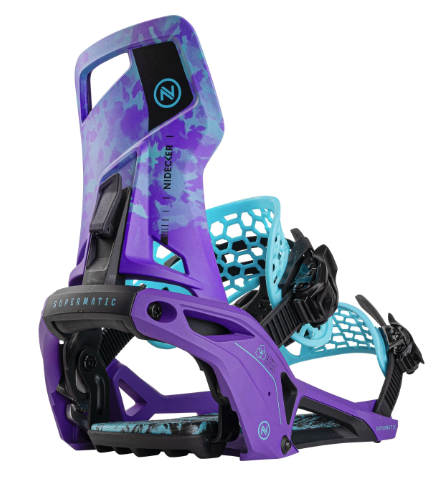
One of the bigger leaps in binding technology was the Nidecker Supermatic’s. At first glance, it resembles a Flow style binding, but the rear-entry design was just a jumping-off point. The Supermatic features an integrated heel cup and traditional straps, the key difference being the upper portion of the highback, which opens for a large entry angle. When you step in with a slight toe-to-heel motion, the heel portion of the footbed locks down with your step and automatically lifts and locks the highback and ankle strap into place. No need to reach behind the binding or lock anything down. You just step in and the binding locks everything into place autoMATICally. From there, it performs very similarly to traditional strap bindings. To get out, you push the release lever and step out with a heel-toe motion. You can also undo all of the straps and step out like a traditional binding if you ever have any issues with the release lever. Unlike the Clickers and Step On’s where there’s only 1 way in and out. The Supermatic’s trade-offs, though, are weight and response.
Weight: The Supermatics naturally require more material and hardware, making the bindings slightly heavier and chunkier overall. Not a show stopper, but not ideal for riders who want to focus on getting in the air and being as nimble as possible.
Response: This chunkier design creates a larger dead spot underfoot (the unresponsive zone created by the base of the binding). This can make the board feel more “planky” and less “playful”. Again, not a big issue, but not preferable for riders who really want to tweak grabs, ankle steer, and preserve board feel.
But for a binding that works with ANY boot and rides mostly like a traditional strap binding with automatic closing, the Supermatics are an impressive leap forward in binding tech.
FASE
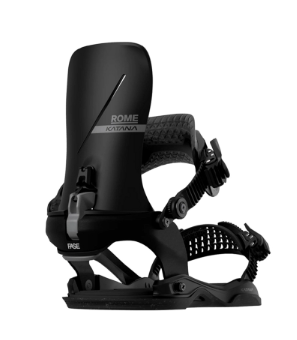
Now for the brand-new FASE binding system. FASE (FAS for fast, E for entry) is a new binding design that aims to combine performance and convenience without forcing a major compromise — and for the most part, it delivers! The FASE system is similar to the Supermatic design but with significantly fewer moving parts and less material. The highback opens up to a large entry angle, and you step in toe-to-heel, pressing your heel down to automatically lock the highback into place. You then manually ratchet the ankle strap down tight, which remains connected to the ladder portion of the strap as a big open loop. The trade-offs here are entry, convenience, and material.
Entry: Getting in and out isn't as effortless as Clicker or Step-On style bindings. Due to the need to step in at a steeper angle with that toe-to-heel motion. Getting out is similar, where once the ankle strap is released, you have to angle your foot heel first, then toe, for the highback to release and remove your foot. Again, this will take some getting used to, but eventually this motion will begin to feel natural. The level to which you tighten the toe strap is also a factor here, as a super-tight toe strap will make it more difficult to get in and out of the binding.
Convenience: This is one of the less automatic bindings, due to the fact that you have to bend over and manually tighten and release the ankle strap every time. This is debatably a similar amount of “work” compared to the other binding systems. With the Step On, Clicker, and Supermatic styles, you have to bend down and pull the release lever to get out. And with the Flow-style bindings, you’ll have to reach behind yourself to lock and release the highback.
Material: The heel cup is slightly thickened on the FASE bindings to accommodate the entry mechanism. This does not impact the performance directly, but arguably can cause some drag in deeper snow or during more laid-over turns. This can also cause a minor weight increase when compared to a slimmer heel cup. Most people will never notice the slight extra weight or potential for drag, but still worth mentioning.
But once you're in and riding, FASE bindings truly perform like traditional bindings, and work with ANY boot. In short, they may not be the fastest or most convenient to get into, but what it gives up in ease of entry, it more than makes up for in performance and versatility.
So which one is right for you?
Burton Step On / K2 Clicker
These are accessibility bindings through and through. Great for casual riders who like to carve/cruise, those who are new to boarding of have injuries/disabilities, and those who have a foot that fits well in Burton's compatible boot lineup.
Flow
The affordable convenience option. For riders who want easier entry, compatibility with any boot, and a feel that's still in the ballpark of a traditional binding. All without breaking the bank.
Nidecker Supermatic
Where performance, versatility, and convenience meet. Ideal for riders who want the ease of a quick-entry system, but want it to work with any boot and to perform more like a traditional binding for season after season.
FASE
The fast, versatile performance option. Built for shredders who want to pack as much riding into their day as possible, without compromising on performance. So if you put performance above all else, and still want to squeeze in a few more hot laps every day, then FASE is right for you.
Overall
…it comes down to what works for you. What fits your foot, budget, riding style, and preferences best. So step into the 21st century, give some new bindings a try, and have more fun shredding this season! And if you’re wondering about our opinion on Clew bindings, the fact that they’re not on this list is our answer to that question.
This can be a hot topic among riders, so if you have a system you like more than another, or if there's something we missed, let us know below. And if you still have questions on which binding is right for you, hit us up on our Gear Advice Portal for personalized advice and recommendations from our team of riders.
-Cheers